Artist Bio Examples: 12 Templates You Can Adapt
A useful artist bio tells a reader who you are, what you make, what shapes the work, and the most relevant evidence of your practice. Start with one plain sentence naming your medium and focus. Add only true context or accomplishments, finish with what you are making now, then adapt the length and voice for the place where the bio will appear.
Every example below is original and fictional. Names, locations, exhibitions, publications, and projects are illustrative—not testimonials or real credentials. Replace every bracketed or invented detail with facts you can verify before publishing.
What is an artist bio?
An artist bio is a short factual narrative about the person behind the work. It usually identifies the artist, discipline or medium, location or relevant background, themes or process, selected accomplishments, and current work. Galleries, grant panels, event organizers, publications, websites, and audiences use it to understand the artist quickly.
Do not force one paragraph to perform all four jobs. Keep a source bio, statement, and CV separately, then create a short profile introduction from the facts that matter to that audience.
What to include in your artist biography
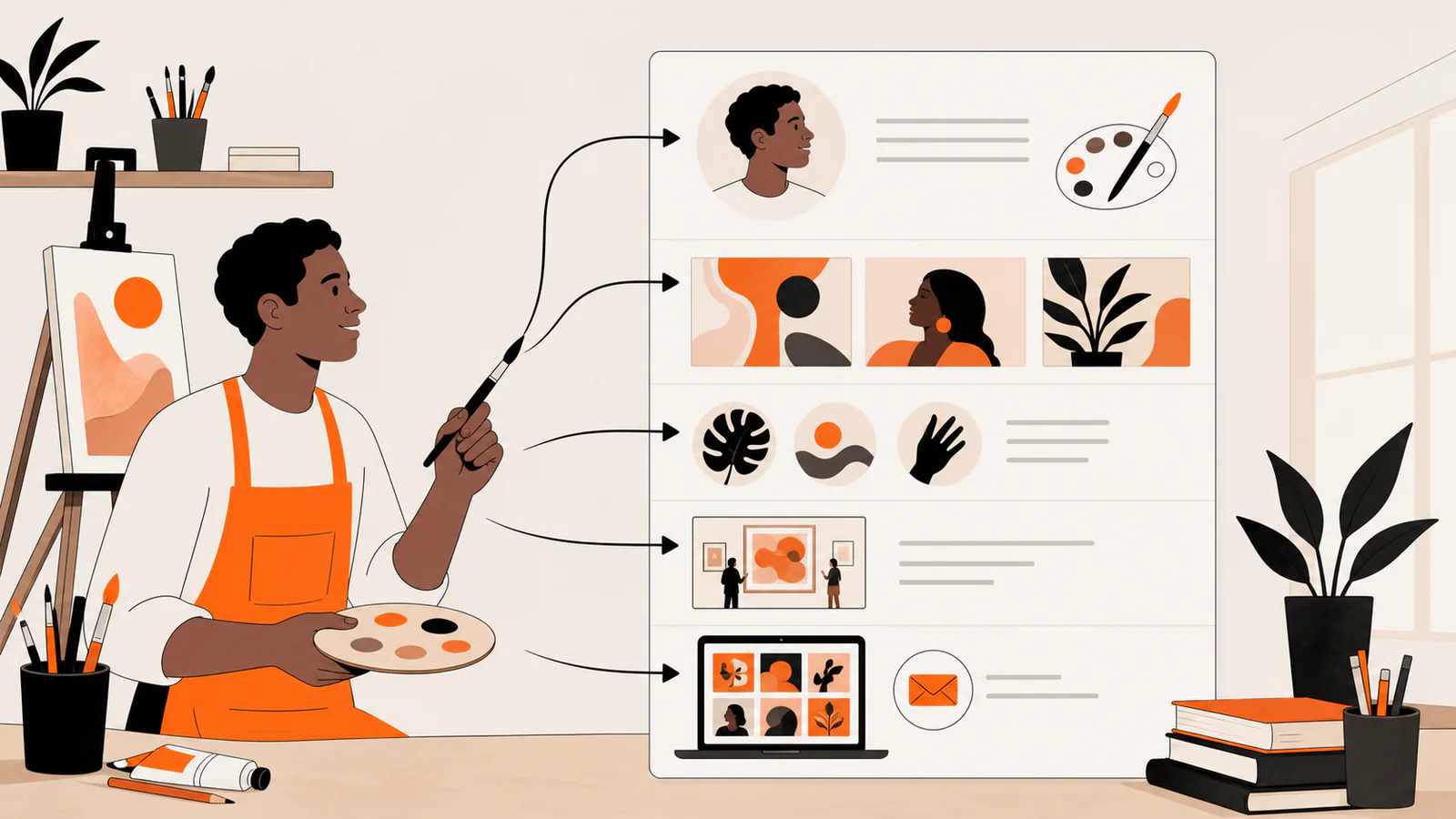
You do not need an award, degree, famous client, or gallery representation to write a credible bio. Specific materials, subjects, working methods, and current projects are better than invented prestige.
A fill-in artist bio formula
[Name] is a [discipline or medium] artist based in [place, if relevant]. [Their] work explores [specific subject or question] through [materials, process, or style]. [One or two true, relevant credentials or contexts]. [Name] is currently [current project, exhibition, research, or direction].
12 artist bio examples to adapt
These examples demonstrate structure and specificity. They are fictional. Copy the pattern, not the credentials, and remove any sentence that is not relevant to your actual practice.
1. One-sentence artist bio
Fictional example: Nora Vale is a Lisbon-based painter whose layered coastal landscapes examine how memory changes familiar places.
2. Short painter bio
Fictional example: Nora Vale is a painter based in Lisbon. Working with oil, cold wax, and found maps, she builds coastal scenes from repeated observation and imperfect memory. Her current series follows the changing edges of working harbors and the communities shaped around them.
3. Illustrator bio
Fictional example: Elias North is an illustrator creating textured editorial images about science, cities, and everyday systems. He combines ink drawings with restrained digital color and develops each commission from interviews and visual research. He is currently building a personal series about the hidden infrastructure beneath public streets.
4. Photographer bio
Fictional example: Mina Sol is a documentary photographer based in Marseille. Her long-form projects focus on family businesses, inherited craft, and the spaces where work becomes community memory. She photographs with available light and records short oral histories alongside each series. Her current project follows independent repair shops across the Mediterranean.
5. Ceramic artist bio
Fictional example: Theo Arden makes functional ceramics that preserve the marks of repeated handling. Using locally reclaimed clay and ash glazes, he produces small batches of cups, bowls, and serving pieces designed for daily use. His current research tests how regional waste materials change glaze color and texture.
6. Sculptor bio
Fictional example: Imani Reed is a sculptor working with timber offcuts, cast paper, and salvaged hardware. Her installations investigate repair as both a physical process and a social promise. Recent work has moved from freestanding forms toward pieces assembled with community participants and designed to change over time.
7. Digital artist bio
Fictional example: Jules Mercer is a digital artist exploring attention, repetition, and imperfect machine vision. They create short animations and browser-based works from hand-drawn source material, small datasets, and deliberately limited systems. Their current series asks what disappears when an image is repeatedly compressed and reconstructed.
8. Muralist bio
Fictional example: Ana Mireles is a muralist and teaching artist whose public works begin with neighborhood interviews and shared image-making sessions. She translates local stories into bold botanical forms and architectural patterns. Alongside commissions, she facilitates workshops that let residents shape the visual language of each wall.
9. Multidisciplinary artist bio
Fictional example: Ren Okafor is a multidisciplinary artist working across sound, performance, and moving image. Their practice studies translation: between languages, between bodies, and between live and recorded space. Each project combines field recordings with a temporary score that changes in response to its venue.
10. Emerging artist bio without awards
Fictional example: Camille Hart is an emerging printmaker based in Glasgow. She uses linocut and monotype to document overlooked signs of seasonal change in dense urban spaces. Self-directed field sketches and neighborhood walks form the basis of her current series, which pairs repeated street views with short written observations.
11. Gallery or application bio
Fictional template: [Name] is a [discipline] artist based in [place]. Their work examines [specific question] through [medium and process]. [Name] has presented work in [two or three relevant, verifiable contexts] and completed [relevant training, residency, commission, or self-directed project]. Their current body of work, [project title], explores [specific focus] and will be presented at [confirmed venue or format, if public].
12. Website or link-page introduction
Fictional template: I am [name], a [medium] artist making [specific kind of work] about [subject]. Start with [portfolio or current project], then find [shop, exhibition, newsletter, contact, or social destinations] below. This first-person version is a profile introduction, not a substitute for the third-person bio requested by many professional organizations.
Choose the right length for each context
These are drafting ranges, not universal platform limits. Mid-America Arts Alliance recommends developing a 150–200-word primary bio plus 100- and 50-word versions. Always follow the word count, house style, and voice requested by the organization receiving your text.
Edit out these common problems
Frequently asked questions
Should an artist bio be written in first or third person?
Third person is common for professional bios because galleries, programs, and publications can reuse it directly. A first-person version can feel natural on your own profile or website. Follow the destination's instructions and keep both versions available.
What if I have no exhibitions or awards?
Lead with the work: medium, subjects, process, location when relevant, and the project you are making now. Include training, community practice, commissions, or self-directed bodies of work only when they are true. Do not invent institutional approval.
How often should I update my artist bio?
Review it whenever a project, location, representation, or current-work sentence changes, and before every important submission. Keep dated source versions so a tailored edit does not erase your reliable master copy.
Where should the bio link send readers?
Send readers to the next useful proof or action: current work, a portfolio, an exhibition page, a shop you actually operate, contact information, or selected social profiles. The label should describe the destination instead of saying only click here.
Sources and methodology
The structure and versioning guidance was checked against the Mid-America Arts Alliance artist-bio guide on August 5, 2026.
The distinction between identity, practice, past evidence, and current projects was checked against the MAWA ArtEd biography guide on August 5, 2026.
Privacy, plain-language, and contact guidance was checked against the Taha Hotu artist-bio guide on August 5, 2026.
Search demand was checked in the Semrush US database on August 5, 2026. Volume, CPC, and difficulty are research estimates, not traffic guarantees. All 12 examples were written for this guide and are fictional.
Turn the short bio into a clear artist profile
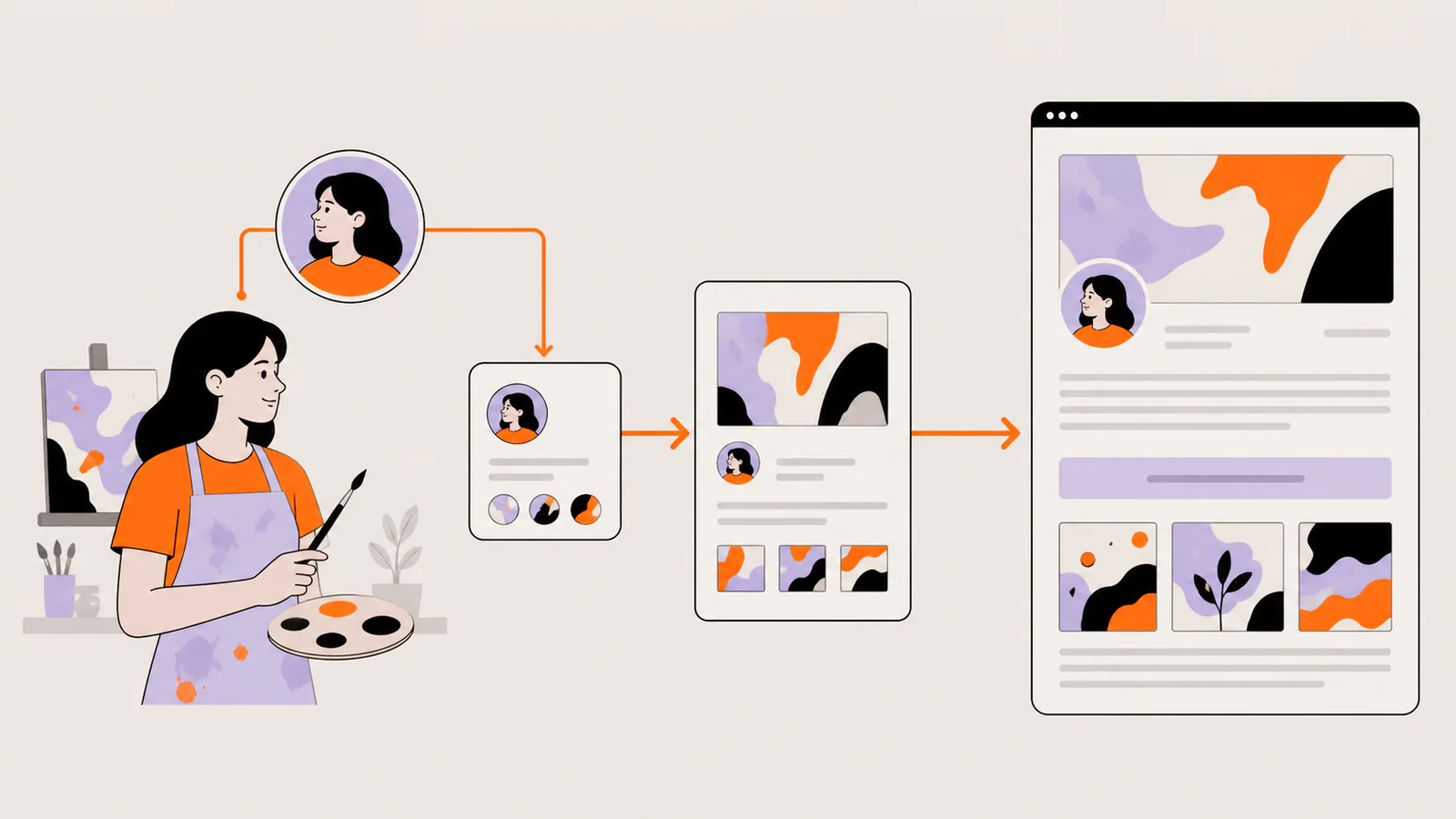
When you need one public destination for the short bio, current work, portfolio, contact route, and selected profiles, create a visual Liink page and replace every placeholder before publishing. Liink does not write or verify your biography, host a native art shop, provide custom domains, or guarantee audience growth.
If photography is your medium, start with the photographer link-in-bio template and connect it only to portfolio, booking, store, or contact destinations you already control.
For the page structure around the biography, use the social media landing page guide to choose one primary action and organize the supporting links.
Need the biography itself? Use the musician bio examples and templates to write verified long, short, and profile versions.
Photographers can use the photographer bio examples and templates for client, profile, press, and gallery versions.