Photographer Bio Examples: 10 Honest Templates to Adapt
A useful photographer bio tells the intended reader what you photograph, where or how you work, what distinguishes the experience or visual approach, and what they should view or do next. A client-facing About page, a gallery biography, a press note, and a social profile can share the same verified facts without using the same paragraph.
All examples below are original and fictional. Names, locations, clients, publications, exhibitions, awards, and projects are illustrative—not real photographers or testimonials. Replace every invented or bracketed detail with facts and permissions you can verify.
Decide which photographer bio you are writing
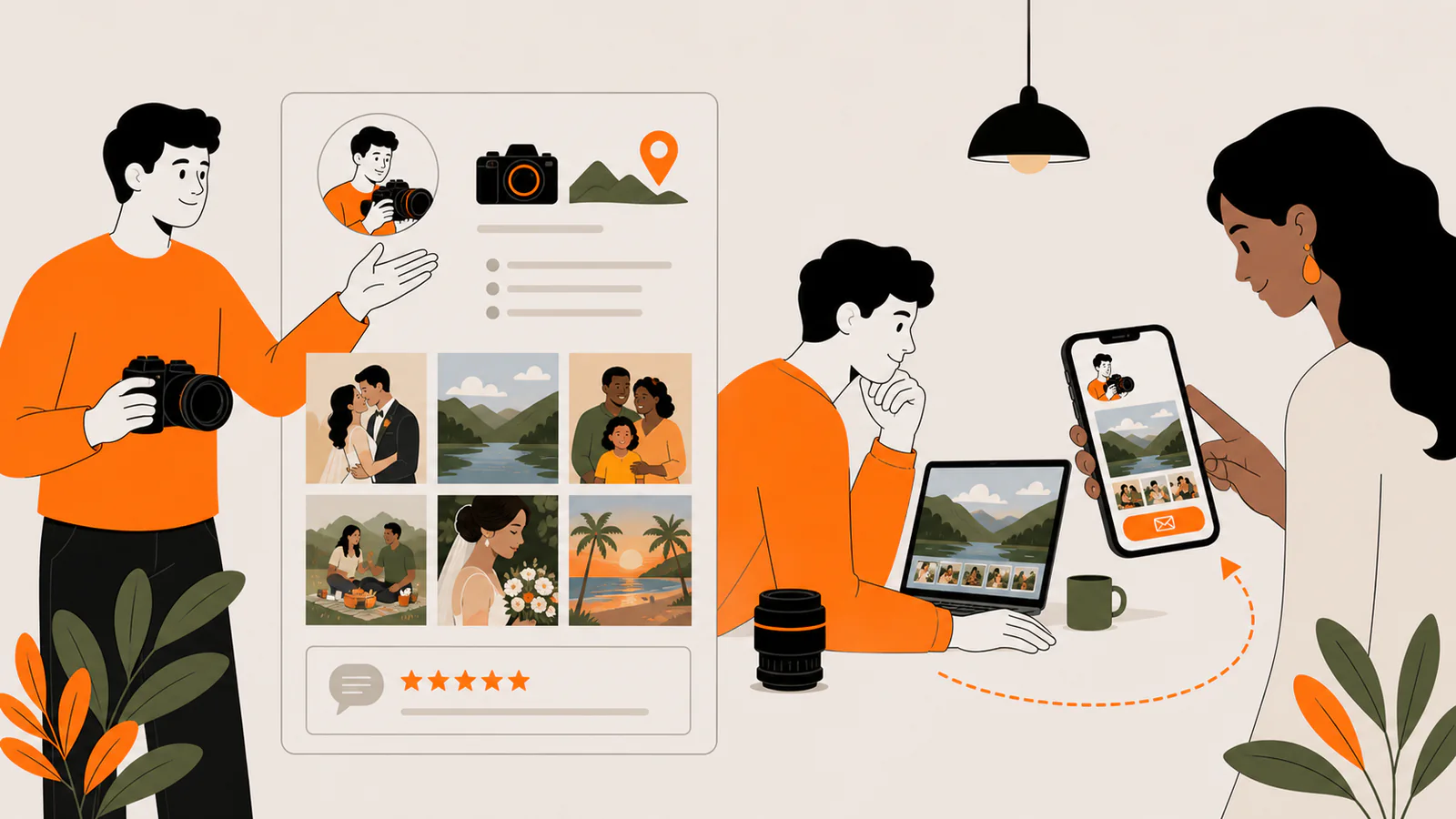
A client bio should reduce uncertainty about fit and process. A fine-art biography should contextualize the practice without becoming an artist statement. Neither needs a complete equipment list, inflated personality claim, or every job you have completed.
What to include in a photography bio
If you have no awards or famous clients, lead with the actual work and experience. Specialty, place, subjects, process, current portfolio, and a thoughtful client workflow are credible evidence. Do not manufacture recognition.
A fill-in photographer bio formula
[Name] is a [specialty or practice] photographer based in [place or service area]. [They] photograph [subjects or assignments] with a [specific visual or working approach]. [One or two relevant, verifiable contexts]. [Name] is currently [project or availability] and can be reached through [appropriate next step].
10 photographer bio examples to adapt
These are fictional examples of structure and specificity. Copy the decision pattern, not the invented identity or experience, and make sure the portfolio directly supports the description you publish.
1. One-sentence photographer bio
Fictional example: Mina Sol is a Marseille-based documentary photographer recording family businesses, inherited craft, and the places where work becomes community memory.
2. Wedding photographer bio
Fictional example: Lena Brooks photographs small weddings across Yorkshire with an unobtrusive documentary approach and a small set of relaxed group portraits. She helps couples build a realistic photo timeline, works primarily with available light, and delivers a coherent record of people, place, and the moments between scheduled events.
3. Portrait photographer bio
Fictional example: Omar Vale is a portrait photographer working from a daylight studio in Rotterdam and on location. His sessions begin with conversation and simple movement rather than fixed poses. He photographs artists, founders, and independent teams who need expressive portraits that still feel recognizably like them.
4. Commercial photographer bio
Fictional template: [Name] is a commercial photographer specializing in [product, hospitality, fashion, food, architecture, or another field]. Working with [relevant team or production approach], [they] create [specific deliverables] for [accurate client type]. Selected commissioned work includes [permitted examples], and current availability covers [location or production scope].
5. Documentary photographer bio
Fictional example: Aya North is a documentary photographer based in Athens. Her long-form work examines migration, seasonal labor, and the informal networks that sustain port cities. She combines photographs with recorded testimony and returns to the same communities over several years. Her current series follows workers moving between islands and mainland markets.
6. Event photographer bio
Fictional example: Theo Hart photographs conferences, performances, and community events across Berlin. He works quietly through live programs, delivers clearly organized editorial selections, and coordinates in advance around access, lighting restrictions, speaker priorities, and turnaround. His portfolio separates stage, audience, sponsor, and behind-the-scenes coverage.
7. Food or product photographer bio
Fictional example: Nia Mercer is a food and still-life photographer creating tactile images for independent restaurants, makers, and editorial teams. Her sets combine restrained styling with close attention to surface and natural imperfection. She collaborates with clients from shot list and pre-production through final crops for web, print, and social use.
8. Architecture or real-estate photographer bio
Fictional template: [Name] photographs [residential, commercial, hospitality, or civic] spaces across [service area]. Their approach emphasizes [light, material, circulation, scale, or lived use] and includes [accurate deliverables such as interiors, exteriors, details, or twilight work]. Booking information should state the actual coverage, licensing, turnaround, and travel process separately.
9. Fine-art photographer bio
Fictional example: Jules Rowan is a fine-art photographer working with staged images, handwritten archives, and small sculptural sets. Their practice explores how family histories are edited through objects that survive a move. The current body of work pairs newly constructed scenes with incomplete captions recovered from anonymous albums.
10. Emerging photographer bio without clients or awards
Fictional example: Camille Reed is an emerging street and landscape photographer based in Glasgow. She builds slow projects through repeated walks along changing industrial edges, photographing the same routes across weather and seasons. Her current portfolio pairs those observations with short field notes and self-published sequences.
First person or third person?
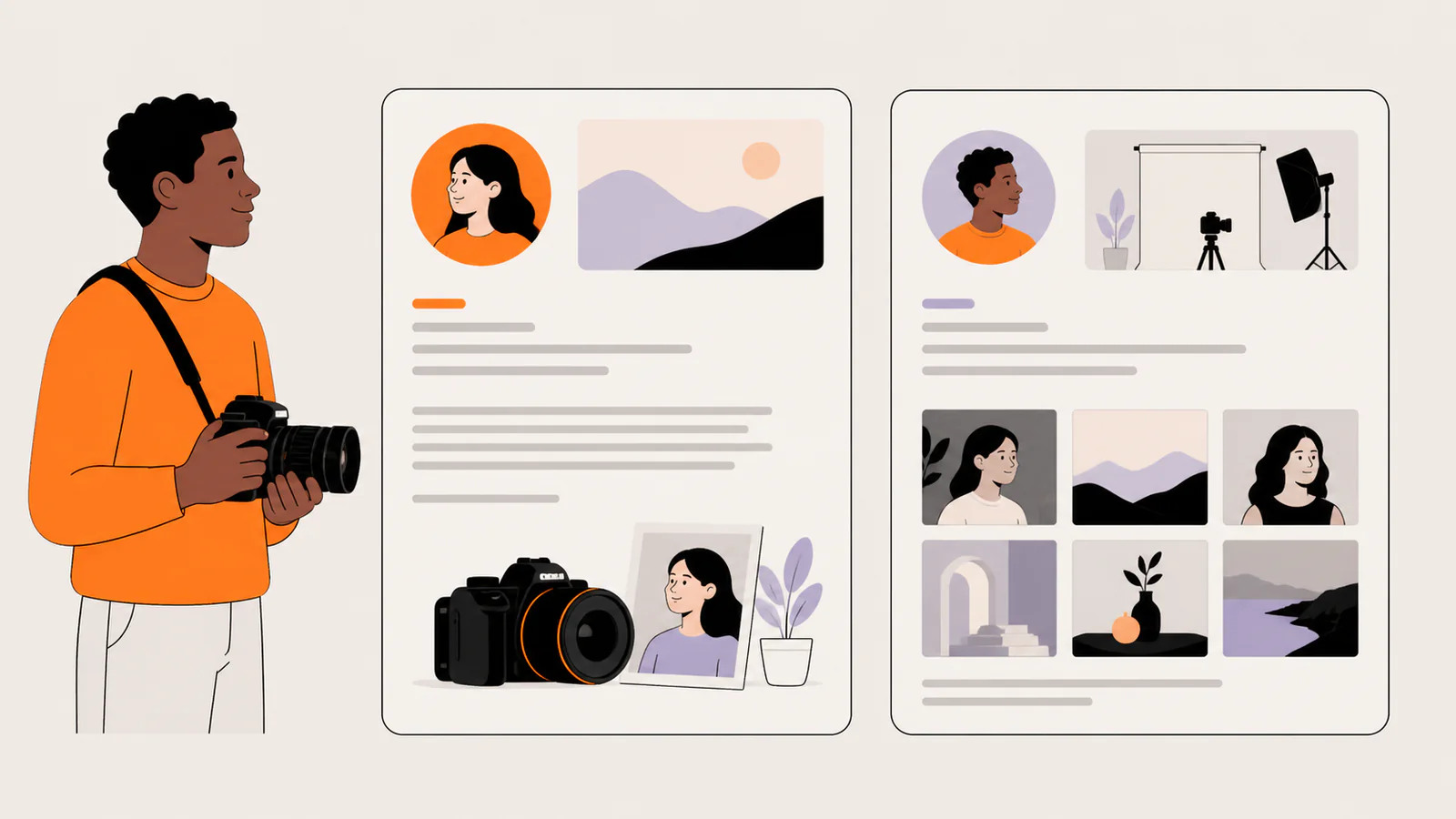
Third person is useful for galleries, awards, publications, speaker introductions, and any recipient that may reuse your bio. First person often feels natural on a client-facing About page or personal profile. American Photographic Artists notes that formal bios are commonly third person while a website can use first person. Keep the facts aligned across both.
These are drafting ranges, not universal limits. The receiving organization or platform decides the final count. Keep several versions so you can meet a request without shrinking a long paragraph at the last minute.
Common photographer bio mistakes
Frequently asked questions
What if I am a new photographer?
State your specialty or current project, location when relevant, subjects, approach, and what the portfolio contains. Self-directed projects, assisting, training, community work, and a clear process can be included when true. Do not invent clients or awards.
Should I mention my camera equipment?
Only when the equipment or process materially explains the work or solves a reader's requirement. A large-format fine-art process or specialist underwater setup may matter; a general camera inventory usually belongs outside the bio.
Should my photographer bio include a call to action?
On your own page, yes: give the reader one relevant next step such as view a portfolio category, explore the current series, check availability, or contact the studio. A program or publication bio may not permit promotional copy, so follow its rules.
Sources and methodology
Photography-specific voice and bio-versus-statement guidance was checked against the American Photographic Artists bio guide on August 5, 2026.
Professional biography structure and versioning was checked against the Mid-America Arts Alliance artist-bio guide on August 5, 2026.
The photography-gallery recommendation to keep a 100-word, third-person version was checked against the LensCulture gallery guide on August 5, 2026.
Search demand was checked in the Semrush US database on August 5, 2026. Volume and difficulty are estimates, not traffic guarantees. All ten examples are fictional and original to this guide.
Pair the bio with a relevant portfolio path
Use the photographer link-in-bio template to organize a short bio, portfolio categories, external booking or store links, video, social profiles, email, and a downloadable file. Replace every placeholder before publishing.
When one public destination fits your workflow, create a visual Liink page and connect only destinations you control. Liink does not provide native booking, proofing, print sales, custom domains, or guaranteed client growth.
For gallery, grant, exhibition, and broader visual-practice bios, use the artist bio examples guide rather than forcing client and institutional contexts into one paragraph.