Musician Bio Examples: 10 Templates for Artists and Bands
A strong musician bio quickly explains who makes the music, what it sounds like, the true story or practice behind it, the most relevant evidence, and what is happening now. Write one verified source bio, then cut it into one-sentence, short, and extended versions for profiles, venues, press, applications, release pages, and your electronic press kit.
Every example below is original and fictional. Names, releases, venues, collaborations, airplay, awards, and audience results are illustrative—not real artists or testimonials. Replace every invented or bracketed detail with facts you can verify before publishing.
What a musician bio needs to do
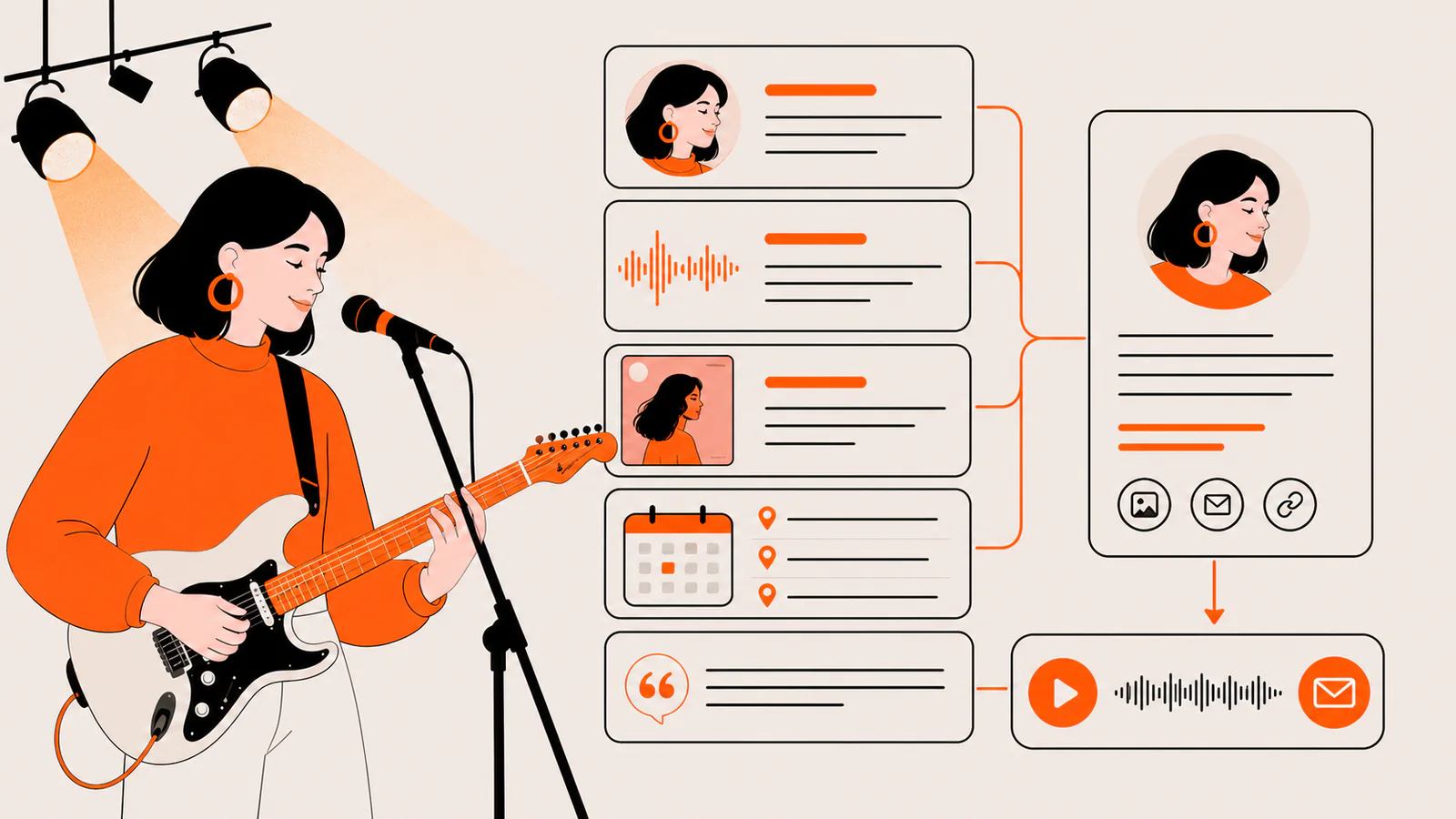
A music bio is a reusable professional introduction, not a complete life story. A booker may need a fast reason to keep listening, a journalist may need accurate context, a festival may need program copy, and a fan may simply want to understand the person or group behind a track. The core facts stay consistent while the emphasis and length change.
Do not paste a press release into every bio field. Keep a reliable master biography and a separate fact sheet for release dates, credits, links, contact details, stage requirements, and technical specifications.
What to include in a music artist bio
An emerging musician can write a credible bio without major venues, press quotes, streaming milestones, or famous collaborators. Describe the actual sound, working method, local context, and current project. Specific truth is more useful than borrowed prestige.
A fill-in musician bio formula
[Artist or band] is a [location, if relevant] [genre, role, or format] creating [specific description of the sound or experience]. The project began [concise and relevant origin]. [One or two true credits, contexts, or points of evidence]. [Artist or band] is currently [release, performance, commission, or next project].
10 musician bio examples to adapt
Use these fictional examples for structure, tone, and level of detail. Do not copy their invented credits. A useful rewrite should sound unmistakably like your real music and remain accurate when a venue or journalist checks it.
1. One-sentence musician bio
Fictional example: Sora Field is a Paris-based electronic composer building slow, tactile pieces from modular synthesis, prepared piano, and recordings of public transport.
2. Solo singer-songwriter bio
Fictional example: Mara June is a folk songwriter from Bristol whose close-miked guitar and conversational vocals turn ordinary journeys into compact character studies. After testing new songs at independent listening rooms, she is recording a five-track collection with a stripped-back trio of guitar, upright bass, and brushed drums.
3. Band bio
Fictional example: North Arcade is a four-piece alternative band formed in Leeds by school friends Amira Bell, Jon Park, Ellis Gray, and Tom Ives. Their live set pairs jagged guitars with spacious vocal harmonies and rhythm changes borrowed from post-punk and broken beat. The group is currently arranging its first studio EP from songs developed during a monthly local residency.
4. Producer bio
Fictional example: Keon Atlas is a producer and mix engineer working between R&B, electronic pop, and left-field club music. He builds tracks from vocal fragments, live percussion, and deliberately unstable textures, then leaves space for the artist's performance to lead. His current work includes an independent collaborative tape and production for three emerging vocalists.
5. DJ bio
Fictional example: Lumen Fox is a Brussels-based DJ whose sets move from warm broken beat and percussive house into late-night techno without losing the thread of a groove. A regular contributor to a community radio program, she develops each set around overlooked records and new music from independent European labels.
6. Classical performer bio
Fictional template: [Name] is a [instrument or voice] performer based in [place]. [They] have appeared with [selected, verifiable ensemble or presenter] and studied with [teacher or institution, when relevant]. Their repertoire centers on [period, composers, technique, or research focus]. [Name] is currently preparing [confirmed recital, role, recording, or educational project].
7. Composer bio
Fictional example: Celia Rowan composes chamber and electroacoustic music shaped by breath, distance, and the acoustics of shared rooms. Her scores combine tightly notated material with small decisions left to performers. She is currently developing a work for clarinet, percussion, and four-channel audio from recordings made in empty civic buildings.
8. Session musician bio
Fictional template: [Name] is a [instrument] player available for [studio, touring, remote recording, arranging, or doubling work]. Recent credits include [two or three accurate projects with the artist's role stated clearly]. Known for [specific technical or collaborative strength], [Name] works from [location or remote setup] and is currently available for [defined engagement].
9. Emerging musician bio without major credits
Fictional example: Tavi Moss is an emerging songwriter and keyboardist making intimate pop songs from layered electric piano, field recordings, and unpolished group vocals. Based in Manchester, they began the project through home demos shared with a small circle of collaborators. They are currently finishing a debut set and documenting the arrangements through live studio videos.
10. Short profile or release-page bio
Fictional template: [Artist] makes [specific sound] from [instruments, process, or perspective]. Start with [latest release or representative track], watch [one useful live video], and find confirmed dates or contact details below. This first-person-friendly profile introduction is shorter than the third-person biography a venue, publication, or application may request.
Choose the right bio length
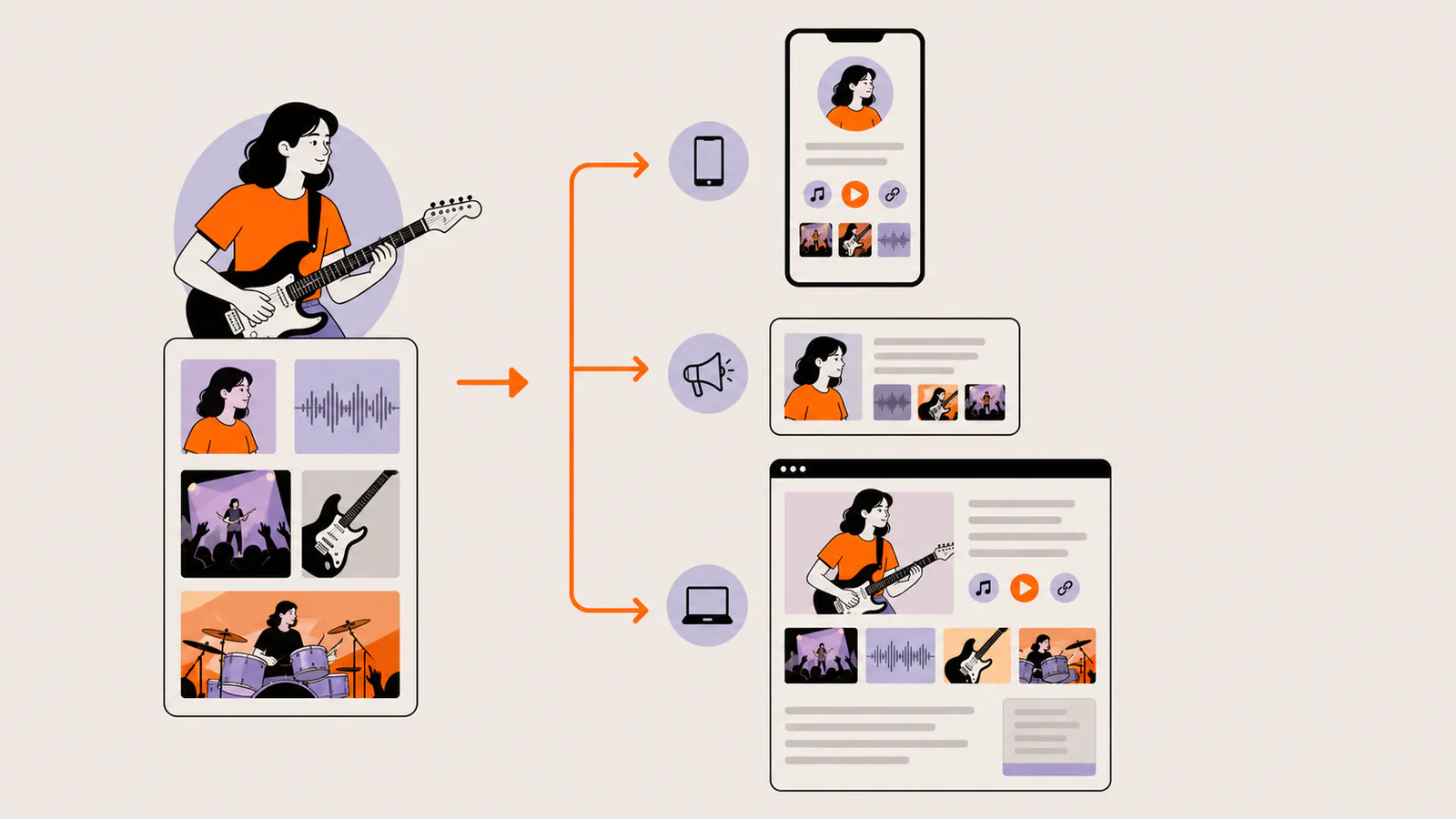
These are working ranges, not universal platform rules. DePaul School of Music recommends keeping different long, medium, and minimal versions. MusicNSW recommends a short paragraph of roughly 100–200 words and a longer version around 250–300 words, while Musicians Institute describes 50–100 and 150–250-word EPK versions. The destination's actual limit always wins.
Make the description sound specific
A press quote is not automatically better than your own factual sentence. If you use one, keep the wording exact, name and link the publication, confirm that the quote refers to your project, and never rewrite a compliment into a larger claim.
What to remove before publishing
Frequently asked questions
Should a musician bio be in first or third person?
Third person is the safest master version because venues, presenters, programs, and media can reuse it. A first-person short intro may fit your own social or link page. Follow the requested format and keep both versions factually aligned.
What if the artist or band is new?
Describe the members or role, location when useful, sound, instrumentation, origin, current repertoire or recording, and the next confirmed step. Early work does not require inflated streaming numbers, imaginary press, or a fictional industry story.
Is a musician bio the same as an EPK?
No. The bio is one component. An electronic press kit can also include music, live video, downloadable photos, release information, selected press, contact details, and technical or booking files appropriate to the recipient.
How often should a music bio be updated?
Review it before every release, application, booking campaign, or major profile update and whenever members, credits, location, contacts, or current work changes. Store dated source versions so campaign edits do not corrupt the master facts.
Sources and methodology
The core audience questions and versioning advice were checked against the DePaul School of Music musician bio guide on August 5, 2026.
The short and long drafting ranges were checked against the MusicNSW artist bio checklist on August 5, 2026.
The distinction between a biography and the wider press-kit package was checked against the Musicians Institute EPK guide on August 5, 2026.
Audience, tone, and length context was checked against the Eastman Institute for Music Leadership biography guide on August 5, 2026.
Search demand was checked in the Semrush US database on August 5, 2026. Volume and difficulty are research estimates, not traffic guarantees. All 10 examples were written for this guide and are fictional.
Publish the bio with music and clear next steps
When you need one public destination for the short bio, representative tracks, live video, dates, contact, EPK file, and selected profiles, create a visual Liink page and replace every placeholder before publishing. Liink does not provide pre-saves, automatic streaming-service routing, native music sales, custom domains, or guaranteed audience growth.
If you are choosing where that profile should live, compare the distinct profile, smart-link, and full-website jobs in the Linktree alternatives for musicians guide before selecting a product.
For painters, photographers, illustrators, sculptors, and other visual practices, use the separate artist bio examples guide instead of mixing two audiences into one generic biography.