
7 Stan Store Alternatives for Different Creator Workflows


The best Stan Store alternative depends on the job you need to preserve. Choose Liink when you already sell elsewhere and want a focused visual profile; Beacons for a broader creator suite with a free starting tier; Linktree for a familiar link page with eligible digital-product selling; Fourthwall for merch and memberships; Gumroad for transaction-priced digital downloads; Kit for an email-first audience business; or Carrd for a low-cost one-page site assembled around external tools.
There is no universal replacement. Stan combines a storefront, digital products, courses, bookings, subscriptions, lead capture, communities, and creator marketing features. Moving only the link in your social bio can leave checkout, customer records, course delivery, email automations, taxes, or recurring billing behind. Compare the complete workflow and test it with a real low-risk product before redirecting your main audience.
Publisher disclosure: Liink publishes this comparison and is one of the alternatives covered. Liink is not affiliated with Stan, Beacons, Linktree, Fourthwall, Gumroad, Kit, or Carrd. We used official product and help-center pages checked on August 26, 2026, and identify Liink's narrower limits instead of presenting it as a full commerce replacement. Pricing and availability can change, so verify the linked official source before moving revenue or customer data.
Stan Store alternatives at a glance
Use the table as a routing guide, not a final verdict. The least expensive option can become costly once you add checkout, email, booking, video hosting, tax handling, or a second subscription. Conversely, a focused page plus an existing commerce provider can be simpler than paying for overlapping all-in-one features.
What are you replacing in Stan Store?
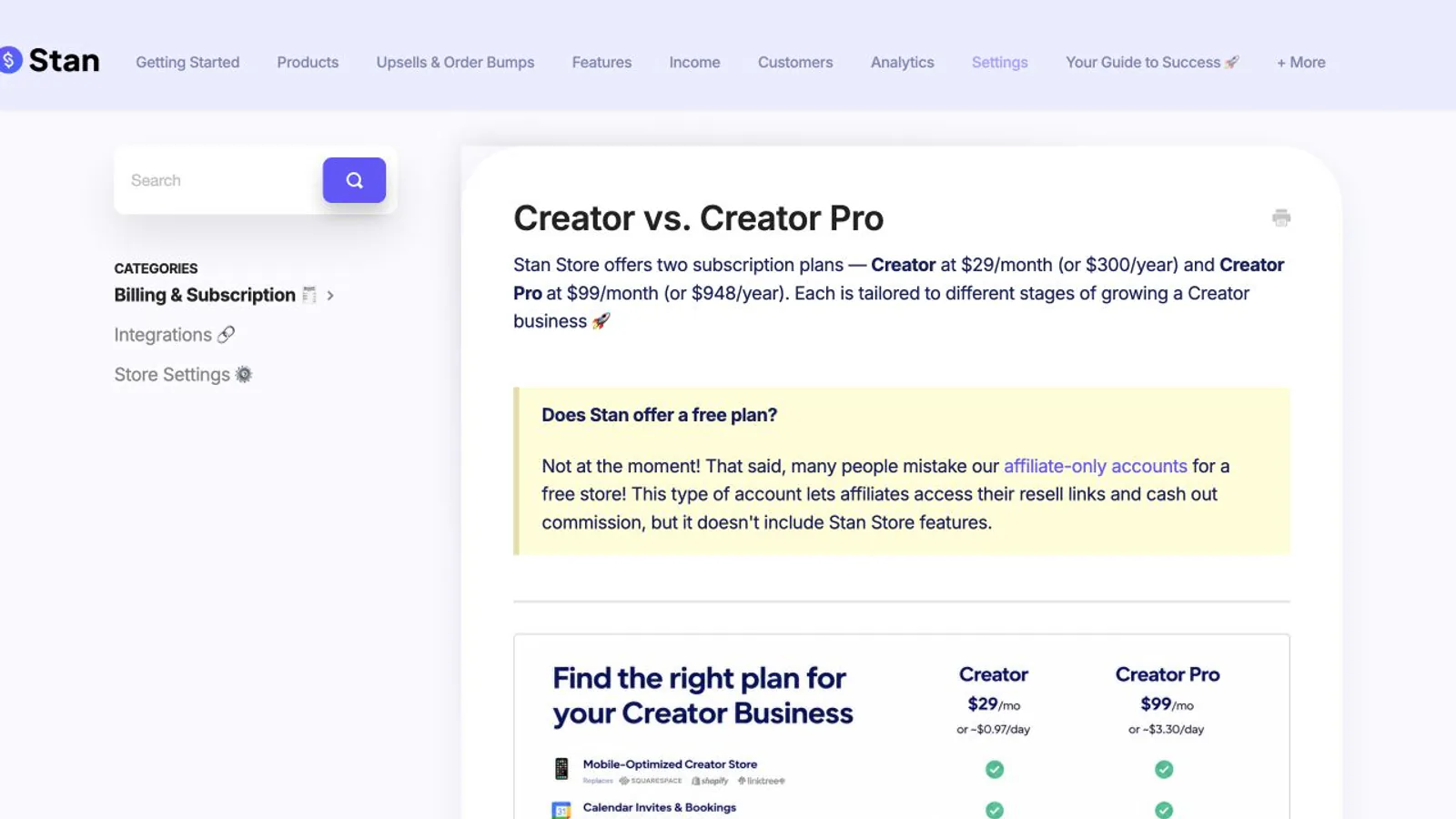
Stan's official plan comparison says its Creator plan includes a storefront, calendar bookings, audience analytics, course building, subscriptions, lead magnets with email collection, communities, and AutoDM. Creator Pro adds features including payment plans, discount codes, limited-quantity offers, upsells and order bumps, funnels, affiliate management, email marketing, and tracking pixels. That breadth explains why a visually similar bio page may still be an operationally incomplete replacement.
Official source: Stan Store's Creator versus Creator Pro help article, last updated June 23, 2026 and checked August 26, 2026. At that check, Stan listed Creator at $29 per month or $300 per year and Creator Pro at $99 per month or $948 per year, with no free plan.
1. Liink: best for a visual profile connected to an existing stack
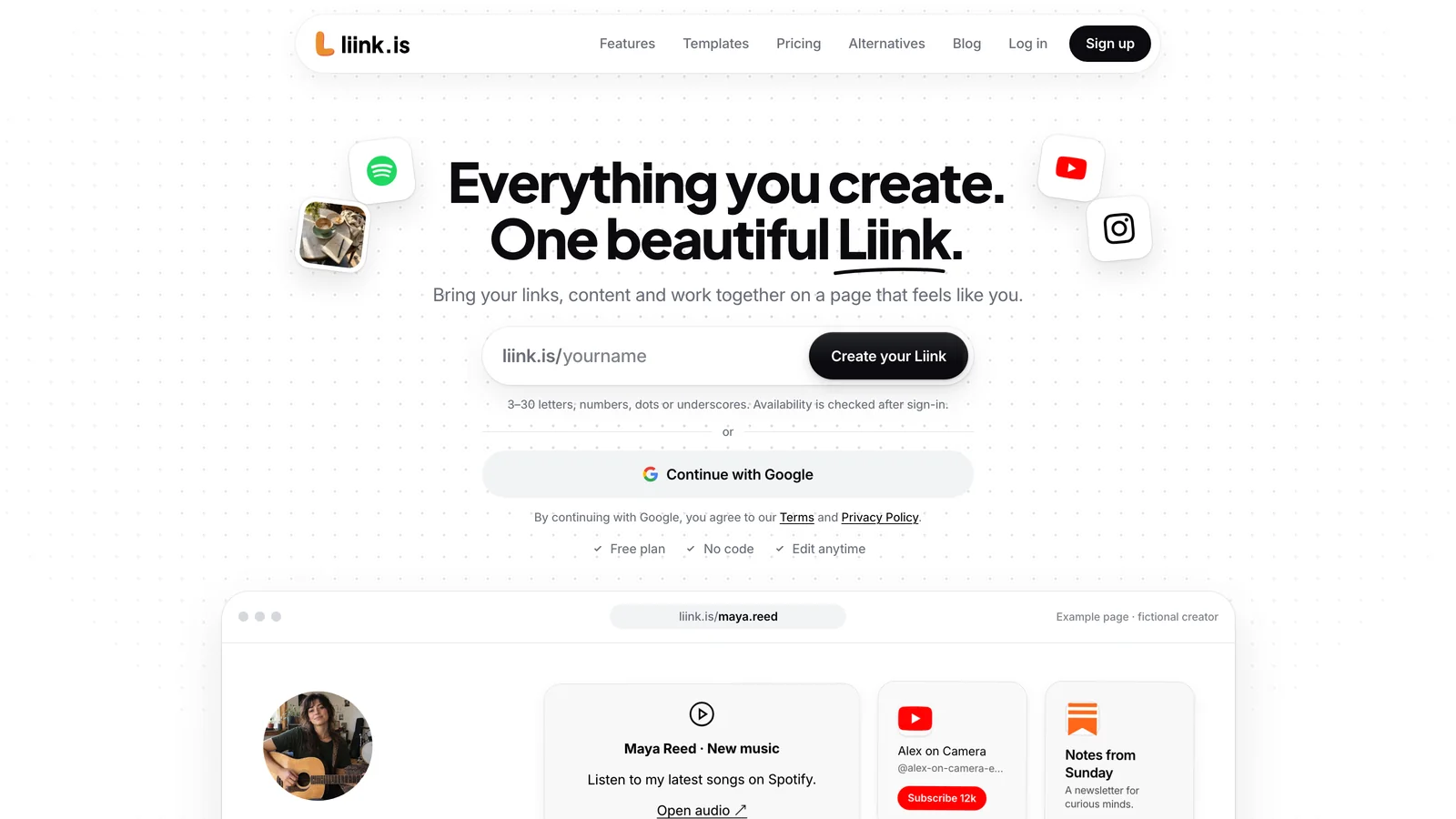
Liink is the focused choice when checkout, booking, courses, email, or subscriptions already live in specialist services you intend to keep. A Liink page can organize text, sections, image-led cards, destination cards, social links, supported media, and files into one visual public profile. That makes it useful as the presentation layer in front of an existing store, newsletter, portfolio, calendar, or community.
The limitation is material: Liink does not provide native checkout, course hosting, bookings, email marketing, or an automatic Stan import. You must keep those functions elsewhere and verify every destination after publishing. This is a deliberate unbundled workflow, not a claim that Liink reproduces Stan's commerce system.
Official source: the Liink product page was checked October 10, 2026 for the supported visual-profile capabilities and free-plan presentation described above. The limitations in this section are also stated explicitly to prevent a false feature comparison.
2. Beacons: best for creators wanting a broader suite with a free start
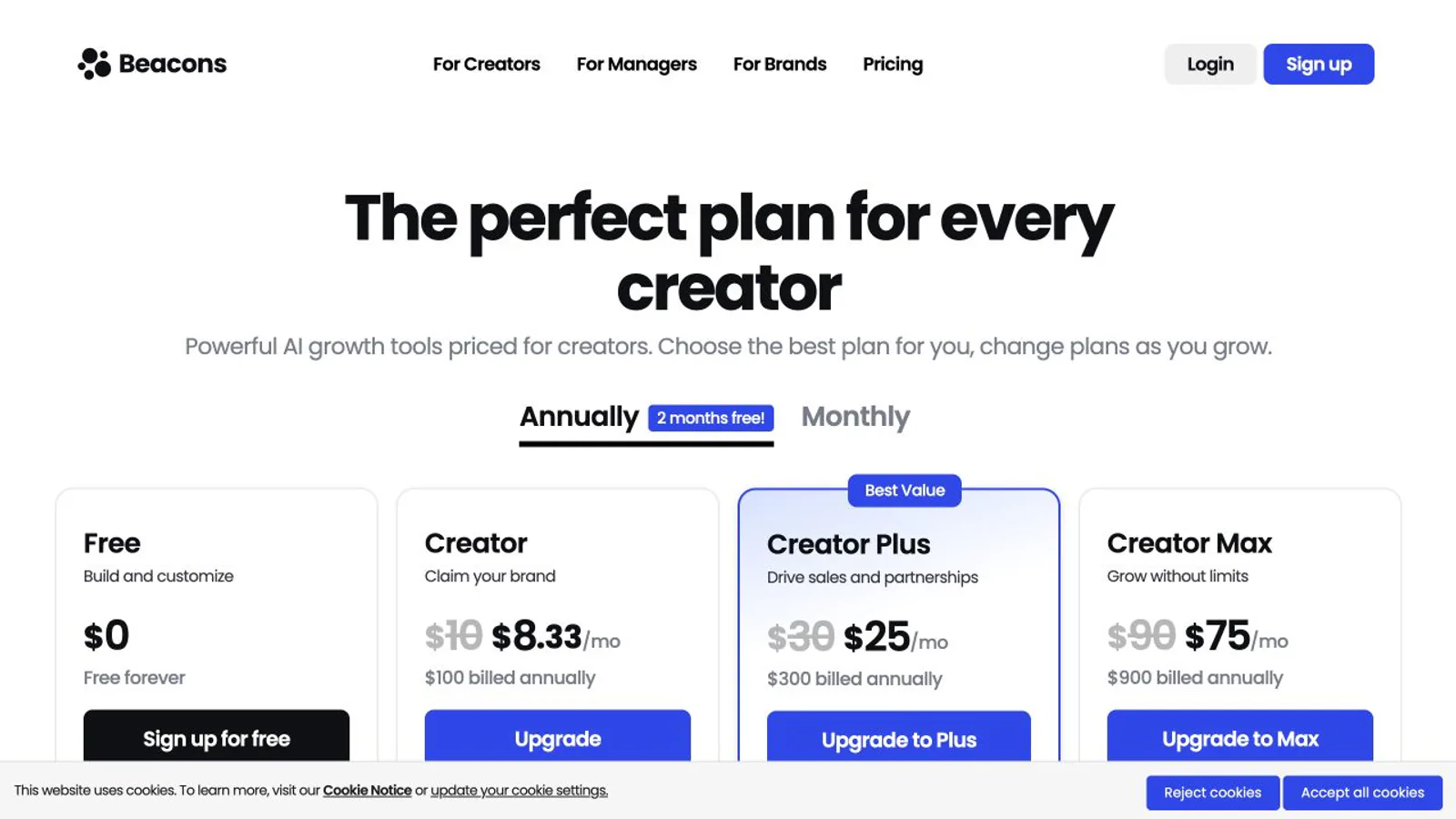
Beacons is closer to an all-in-one creator business suite. Its official plans page lists a free plan with a customizable link in bio, a media kit, digital-product selling, a monthly email allowance, and analytics. Paid tiers add combinations of a custom domain, higher email limits, selling tools, courses, memberships, appointments, and different seller-fee terms. This makes Beacons a more direct candidate when you want several Stan-like jobs under one account rather than a presentation layer alone.
The tradeoff is plan complexity. Compare the seller fee, email allowance, commerce features, and domain support on the specific tier you would use; do not assume the free tier contains everything shown elsewhere on the product site. Model fees against realistic revenue, including payment processing that may be separate.
Official source: Beacons plans was checked August 26, 2026. At that check, the Free plan was presented as $0 forever with a 9% seller fee, while higher plans changed the included tools and fee treatment.
3. Linktree: best for a familiar link page with eligible selling
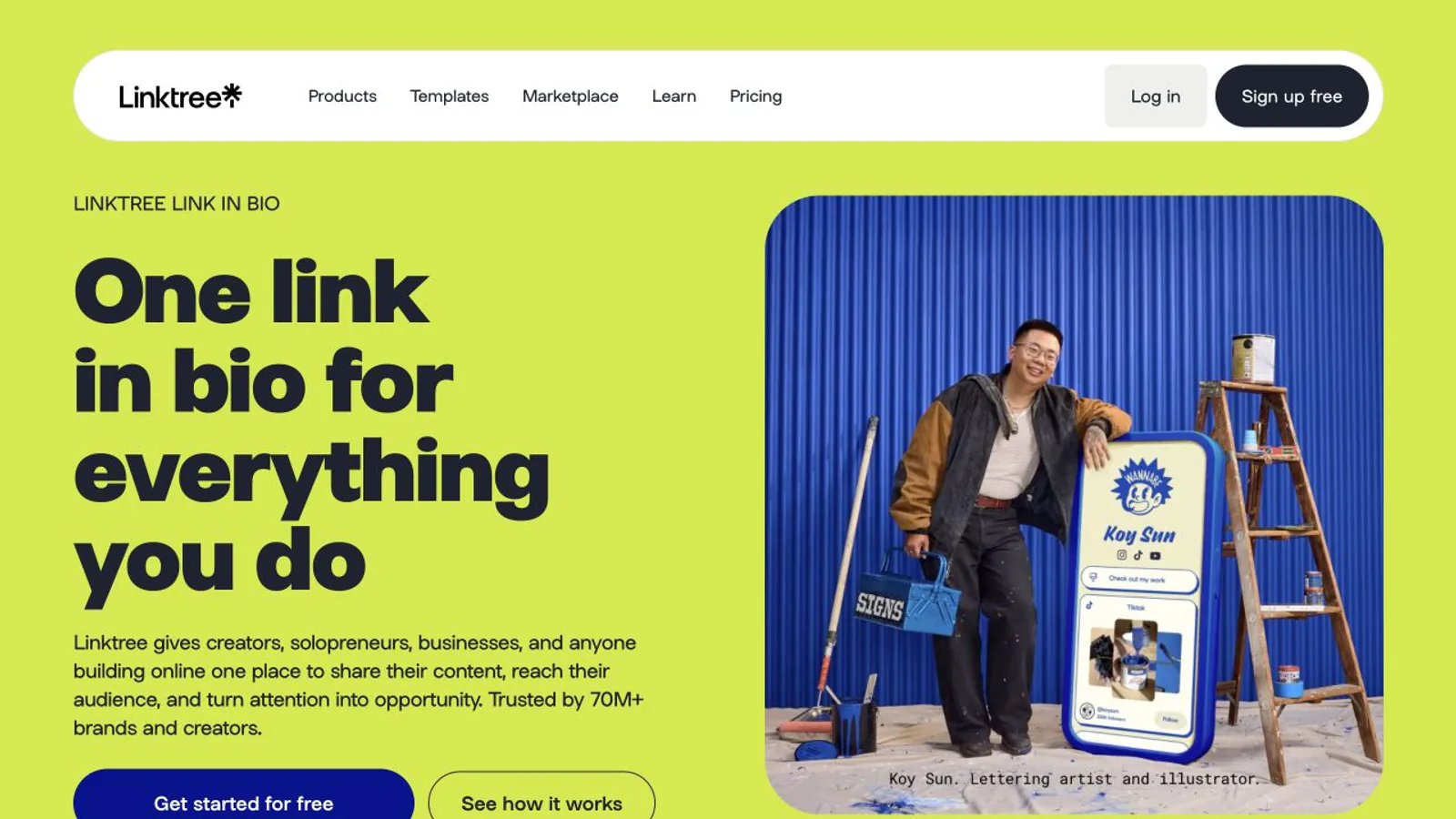
Linktree combines a widely recognized link-page format with paid customization and analytics, plus commerce features where supported. Its official help center documents digital-product and course selling, and separately explains transaction fees by plan. It can suit a creator who prioritizes a familiar profile experience and wants to test a small digital catalog without building a separate website.
Check eligibility before treating Linktree as a store replacement. The help center says commerce products are available only in eligible countries, and transaction fees differ by plan; Stripe processing is separate. Course depth, booking workflows, communities, automation, and customer-data needs should be verified feature by feature rather than inferred from the presence of a Buy button.
Official source: Linktree's paid-features overview was checked August 26, 2026 for plan-dependent customization, analytics, and monetization capabilities.
Official source: Linktree's transaction and processing fees guide was published October 22, 2025 and checked August 26, 2026. It listed digital-product and course transaction fees of 12% on Free, 9% on Starter and Pro, and 0% on Premium, excluding Stripe processing.
4. Fourthwall: best for merchandise, memberships, and a branded shop
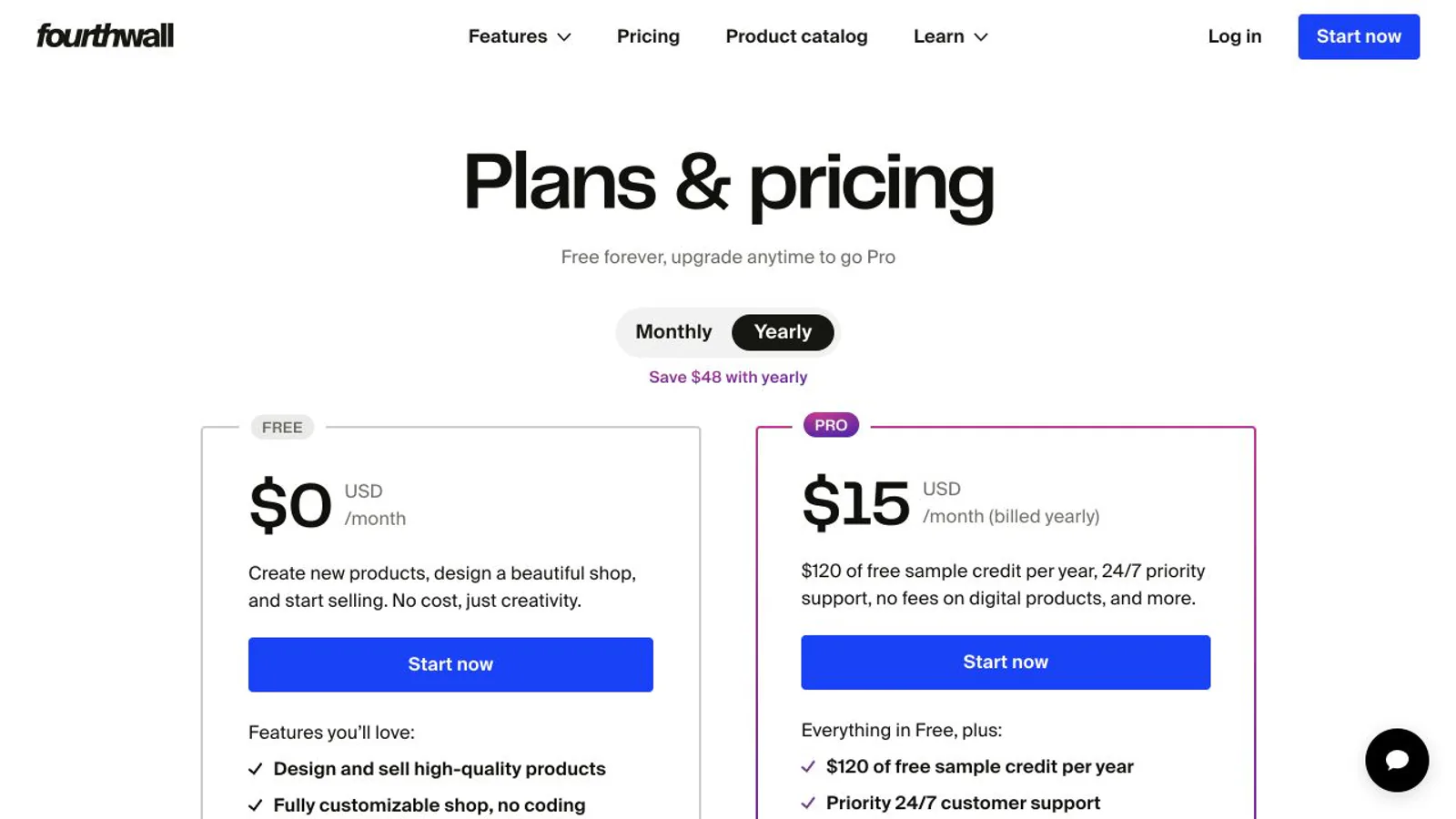
Fourthwall is a stronger fit when the business centers on merchandise, memberships, or digital products rather than a compact social-bio page. Its official pricing page presents a free starting plan with a shop, products, memberships, and analytics, without a monthly fee on that tier. It also publishes distinct fee treatment for catalog products, self-sourced products, digital products, and memberships.
That commerce orientation is the advantage and the constraint. A shop-first destination may be ideal for a creator brand with fulfillment and member benefits, but heavier than needed for someone who only wants to route visitors to existing services. Confirm fulfillment costs, margins, payout timing, regional shipping, tax treatment, and the exact membership experience before migrating.
Official source: Fourthwall pricing was checked August 26, 2026. At that check, Fourthwall described its Free plan as $0 per month and listed a 5% flat fee for digital products and memberships on Free, with separate product-cost rules.
5. Gumroad: best for straightforward digital products and memberships
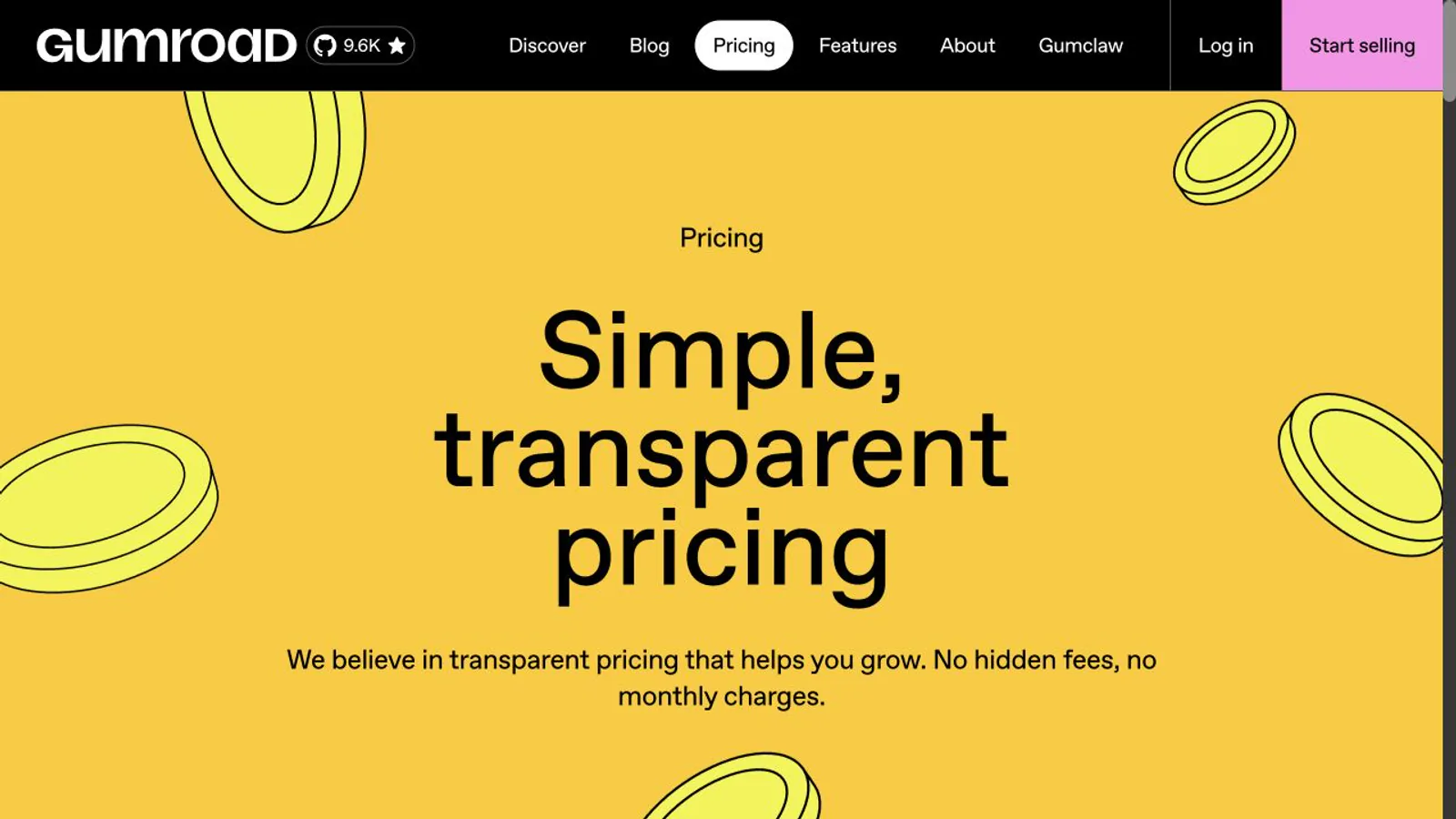
Gumroad is appealing when the main requirement is selling files, tutorials, courses, ebooks, or memberships without paying a monthly platform subscription. Its official pricing page uses transaction pricing instead: direct sales through a profile or direct links have one rate, while purchases found through Gumroad Discover have a higher rate. Gumroad also states that it has acted as merchant of record since January 1, 2025, handling sales-tax collection and remittance where it applies.
The simple setup does not remove migration work. Review product-file limits, customer exports, license or access delivery, refund handling, payout availability, subscription migration, and how much traffic could arrive through Discover versus your own links. A transaction-based platform can be economical at low volume and comparatively expensive as revenue grows.
Official source: Gumroad pricing was checked August 26, 2026. At that check, Gumroad listed no monthly charge, a 10% plus $0.50 fee for direct/profile sales, and a 30% fee for Discover purchases.
6. Kit: best for an email-first creator business
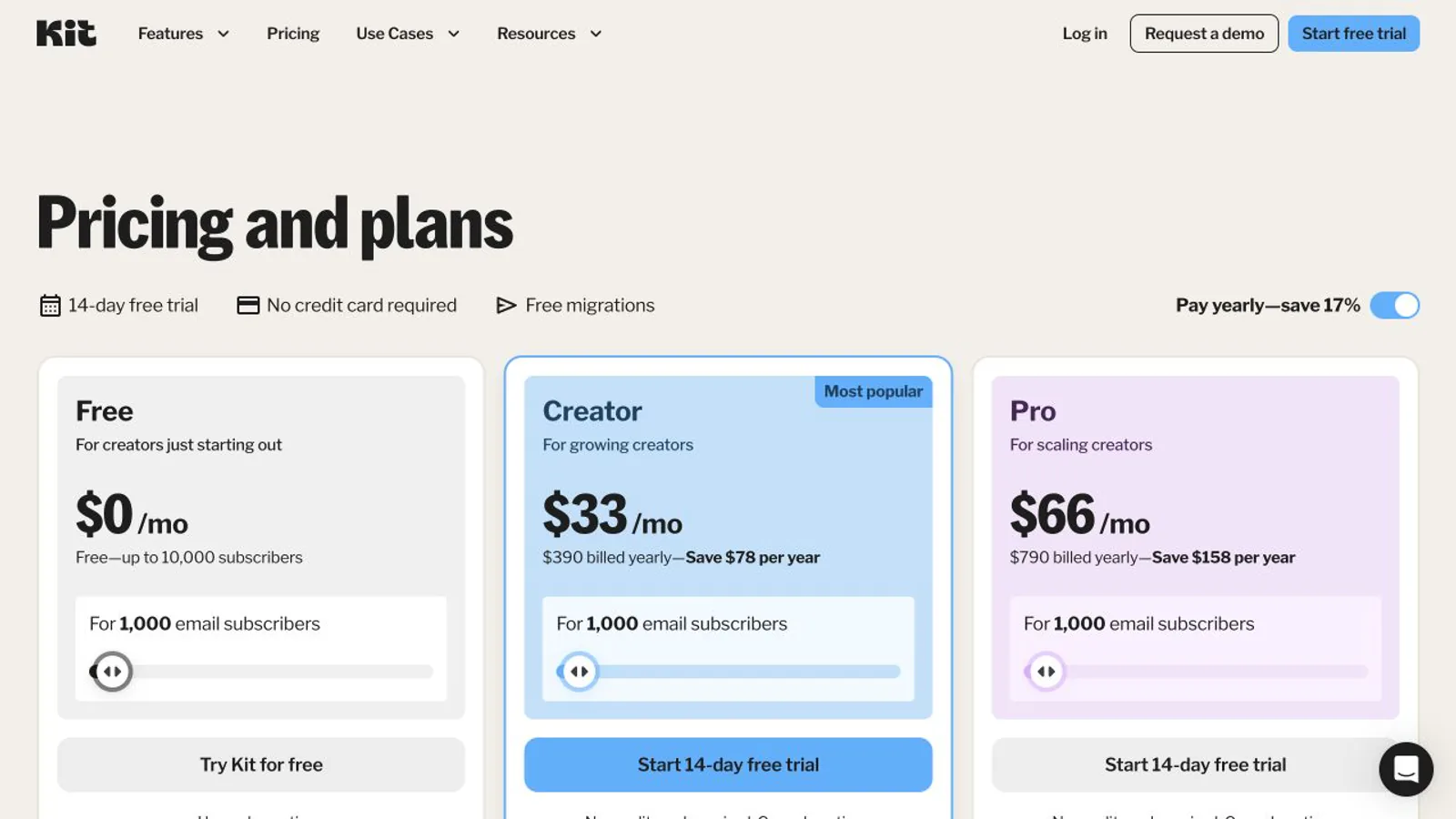
Kit is the strongest candidate here when the owned email audience is the center of the business. Its official pricing page presents a free Newsletter plan for up to 10,000 subscribers with landing pages, forms, broadcasts, tagging and segmentation, and the ability to sell digital products and subscriptions. Paid plans add more automation and growth features. This can consolidate lead capture, email publishing, segmentation, and simple sales around subscriber records.
Kit should not be assumed to reproduce a visual creator storefront, course community, or booking system. Treat it as an email and audience platform with commerce capabilities, then connect whatever public profile, calendar, learning, or community tools remain necessary. Before switching, test consent imports, automations, deliverability, sender-domain setup, purchase tagging, and cancellation flows.
Official source: Kit pricing was checked August 26, 2026. At that check, the free Newsletter plan was listed at $0 per month for up to 10,000 subscribers with unlimited landing pages and forms, broadcasts, tagging and segmentation, and digital-product and subscription selling.
7. Carrd: best for an inexpensive custom one-page site
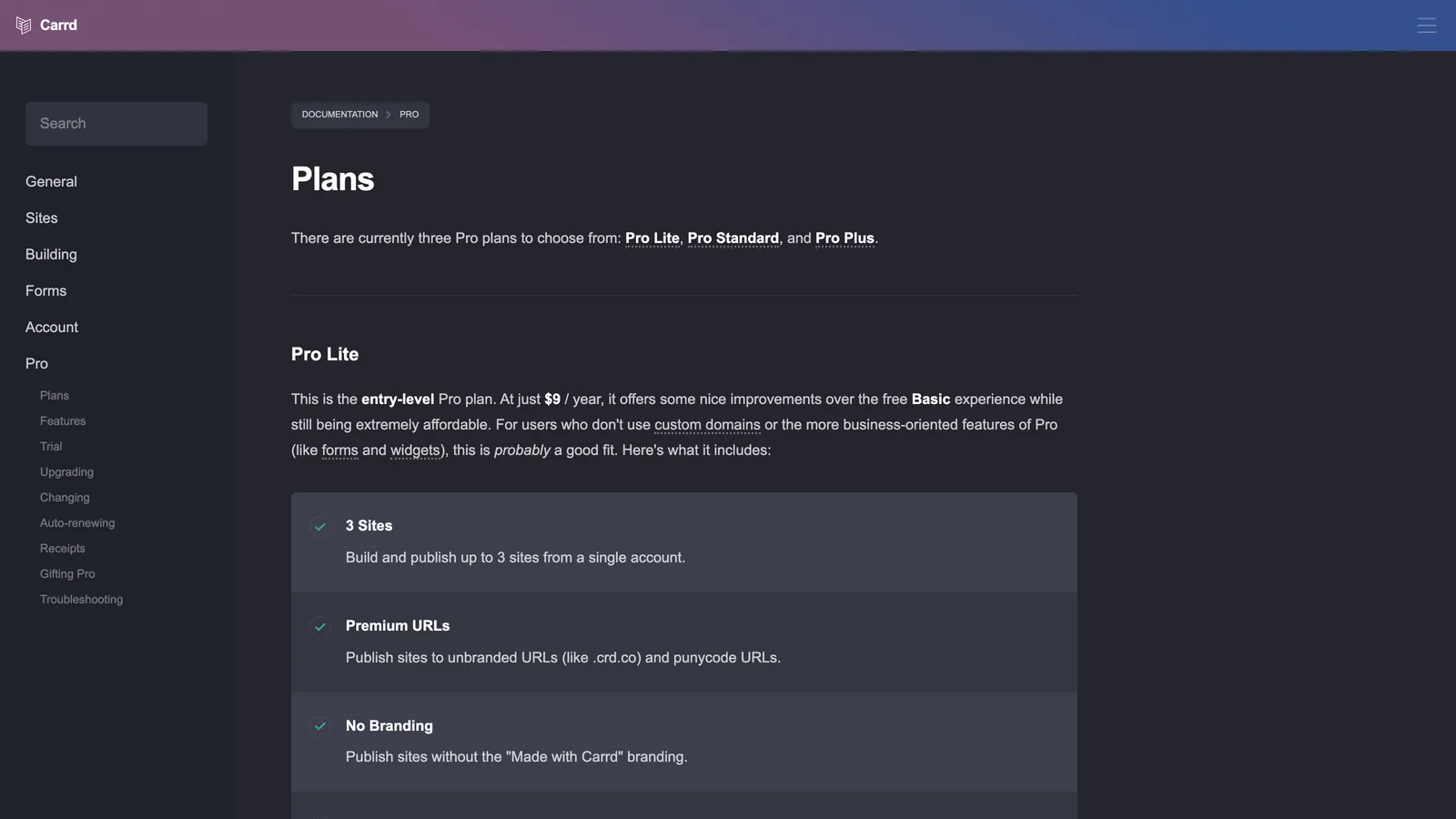
Carrd is useful when you want more control over a responsive one-page site and are comfortable assembling the operating stack yourself. Carrd's official plan documentation lists Pro Lite for simple multi-site use and Pro Standard with custom domains, forms, widgets, embeds, and analytics. Those embeds can connect external checkout, scheduling, email, video, or form providers without making Carrd the system of record.
This is the most do-it-yourself option in the shortlist. Carrd does not become a native Stan replacement merely because third-party widgets can appear on the page. Budget for the external products, confirm their mobile embed behavior, and make ownership clear across domain, analytics, forms, payments, and customer support.
Official source: Carrd Pro plans documentation was checked August 26, 2026. At that check, Pro Lite was listed at $9 per year and Pro Standard at $19 per year; custom domains, forms, widgets, embeds, and analytics were included from Pro Standard rather than Pro Lite.
How to choose without breaking your creator business
Related Stan, Beacons, and Linktree comparisons
If your shortlist is already down to two platforms, read Stan Store vs Linktree for a focused comparison of their different roles.
If the all-in-one creator-suite model is closest to your needs, compare the options in Beacons alternatives before deciding which workflows should remain bundled.
For a wider review of public-profile tools, use the Linktree alternatives guide and separate visual-page requirements from commerce requirements.
Frequently asked questions
What is the best free Stan Store alternative?
There is no free option that is automatically equivalent to every Stan workflow. Beacons and Fourthwall publish free starting plans with different commerce models; Gumroad has no monthly platform charge but applies transaction fees; Kit offers a free email-focused plan; and Liink offers a focused visual profile rather than native commerce. Choose based on the workflow and total fees, not the word free.
Can Liink replace Stan Store?
Liink can replace the visual public-profile layer when checkout, booking, courses, email, and subscriptions already live in other services. It cannot replace Stan's native commerce and creator-business features on its own. A realistic Liink migration keeps those systems external, tests every destination, and uses Liink as the organized front door.
Which Stan Store alternative is best for courses?
Start by defining course depth: a paid file or simple lesson sequence is different from structured modules, progress tracking, community, certificates, cohorts, or live sessions. The official pages checked for this guide show course-related capabilities for Beacons, Linktree, Gumroad, and Stan, but they do not prove identical learning experiences. Create a test course and evaluate the learner journey before moving buyers.
What should I export before leaving Stan Store?
Export or securely archive customer and subscriber records, consent evidence, transaction and tax reports, product copy, media, downloadable files, course materials, booking rules, discount codes, affiliate arrangements, analytics, automations, and recurring-subscription details. Check legal retention requirements and the destination platform's import format before cancelling anything.
Should I choose the platform with the lowest monthly price?
Not by itself. A low subscription can coexist with higher transaction fees, paid add-ons, external email or booking costs, and more manual work. Estimate total platform and processing cost at your actual revenue, then include migration risk, data access, support, and the time needed to maintain several connected tools.
Test a focused visual profile
If you already have reliable checkout, booking, email, and delivery tools, create a Liink visual profile and connect a test version to those destinations before changing your main bio link. Liink does not provide native checkout, courses, booking, email marketing, or automatic Stan imports, and it does not guarantee traffic or sales.
The safe decision is the one you can verify end to end. Keep the current system recoverable, test the alternative with real devices and a low-risk transaction, document what remains external, and change the public link only after customers can complete the promised action without confusion.