
Link-in-Bio SEO: What Can Actually Rank?

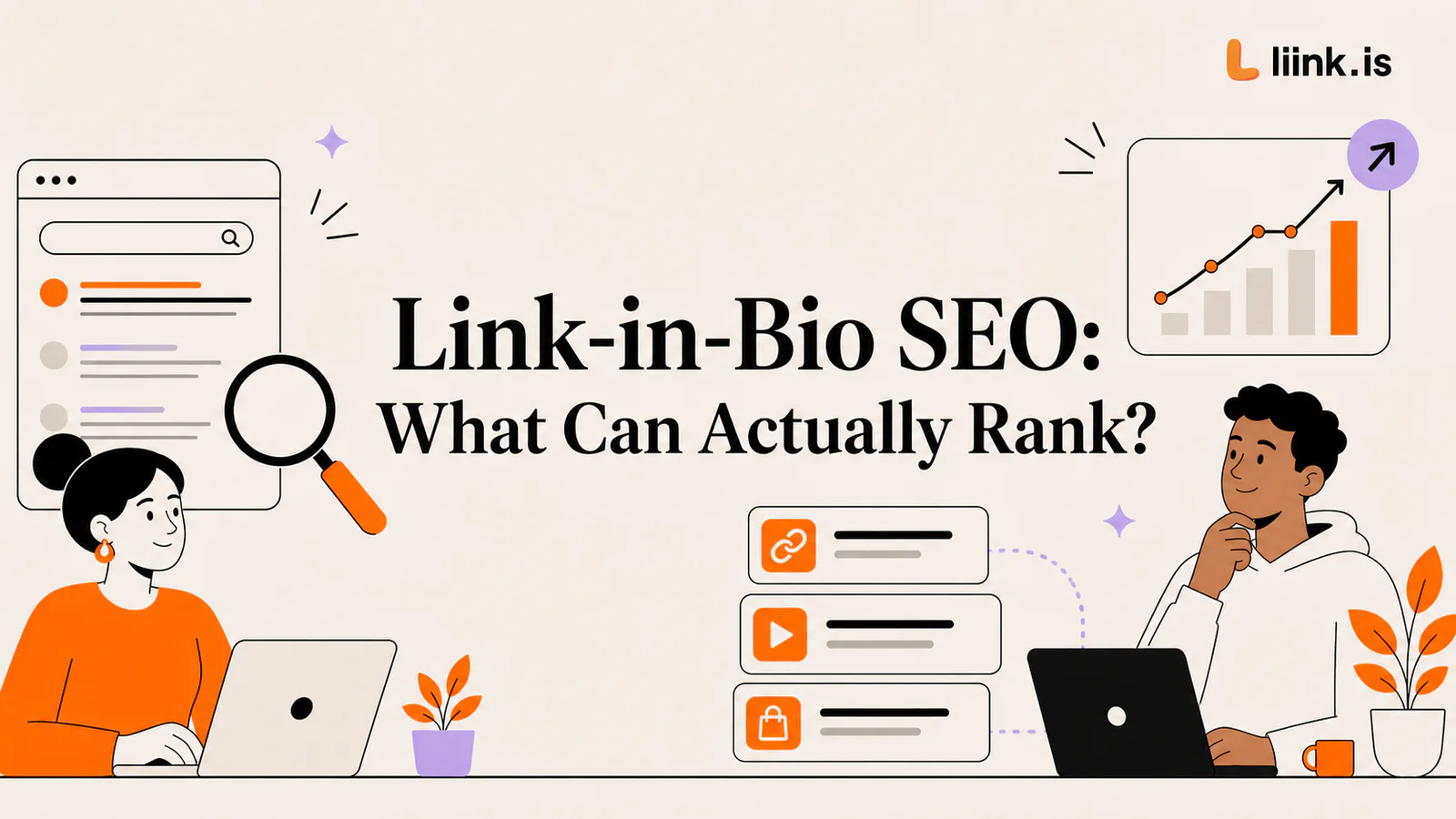
A link-in-bio page can appear in search, but it rarely ranks for competitive non-brand topics merely because it contains many buttons. Search value comes from crawlable access, a stable canonical URL, a descriptive title and main heading, useful visible text, relevant internal and external references, and pages that answer distinct questions. The profile hub should clarify the entity and route visitors; deeper articles, comparisons, use cases, and evidence pages should carry broader topic demand.
Disclosure: this guide is published by Liink and describes practices used on Liink's own site. It is not a guarantee of indexing, ranking, AI citations, traffic, or conversions. Google documentation was checked September 1, 2026. Search systems change and decide crawling, canonicalization, indexing, title links, snippets, and rankings independently.
What is link-in-bio SEO?
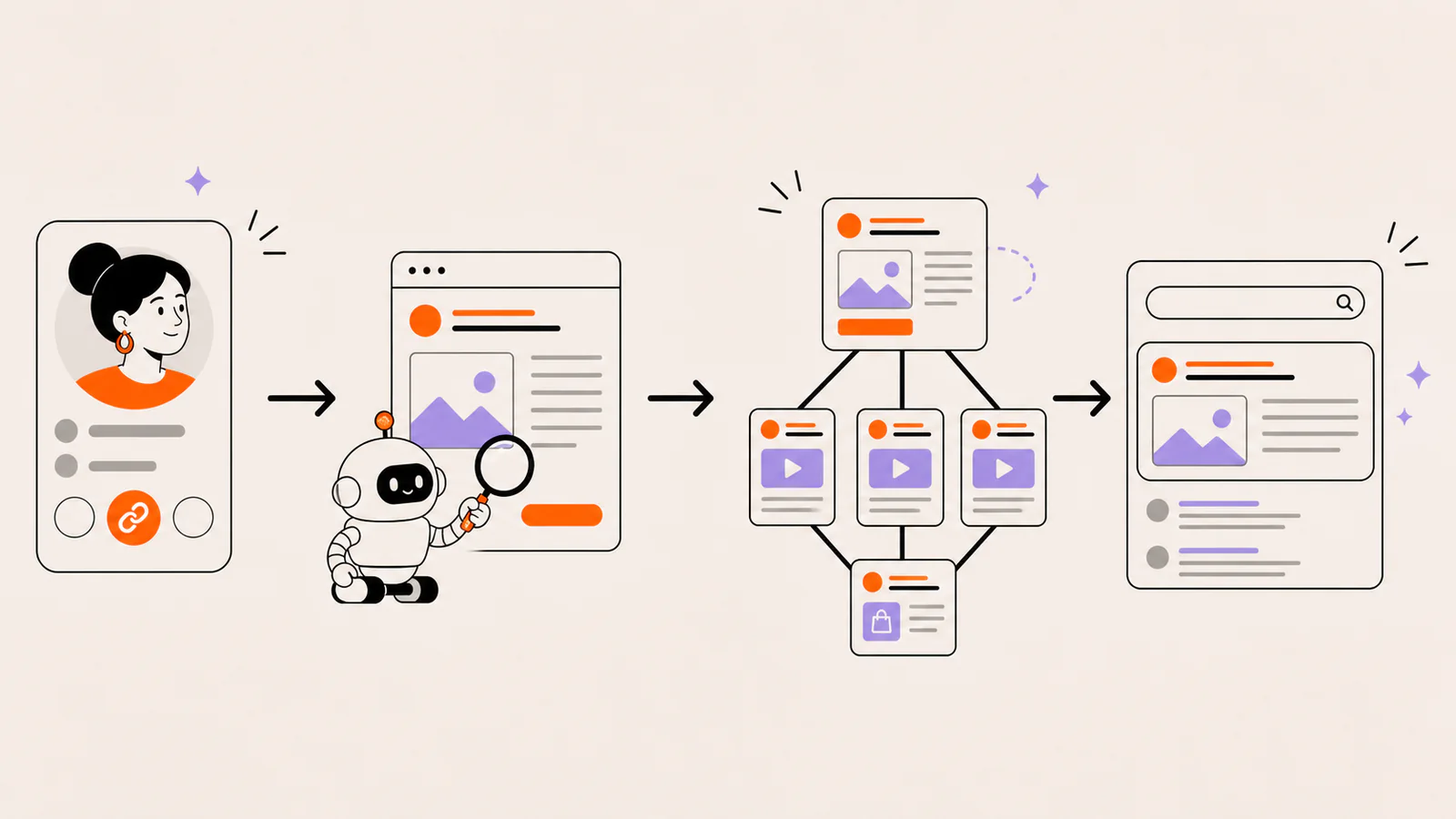
Link-in-bio SEO is the work of making a public profile and its connected content understandable to search engines and useful to searchers. It has three layers: technical access, information quality, and authority. Technical access lets crawlers retrieve and follow the page. Information quality explains the person, organization, category, audience, and destinations. Authority comes from genuine references and links that help people, not from hidden badges, reciprocal-link automation, or repeated keyword pages.
The technical minimum
Make links crawlable and meaningful
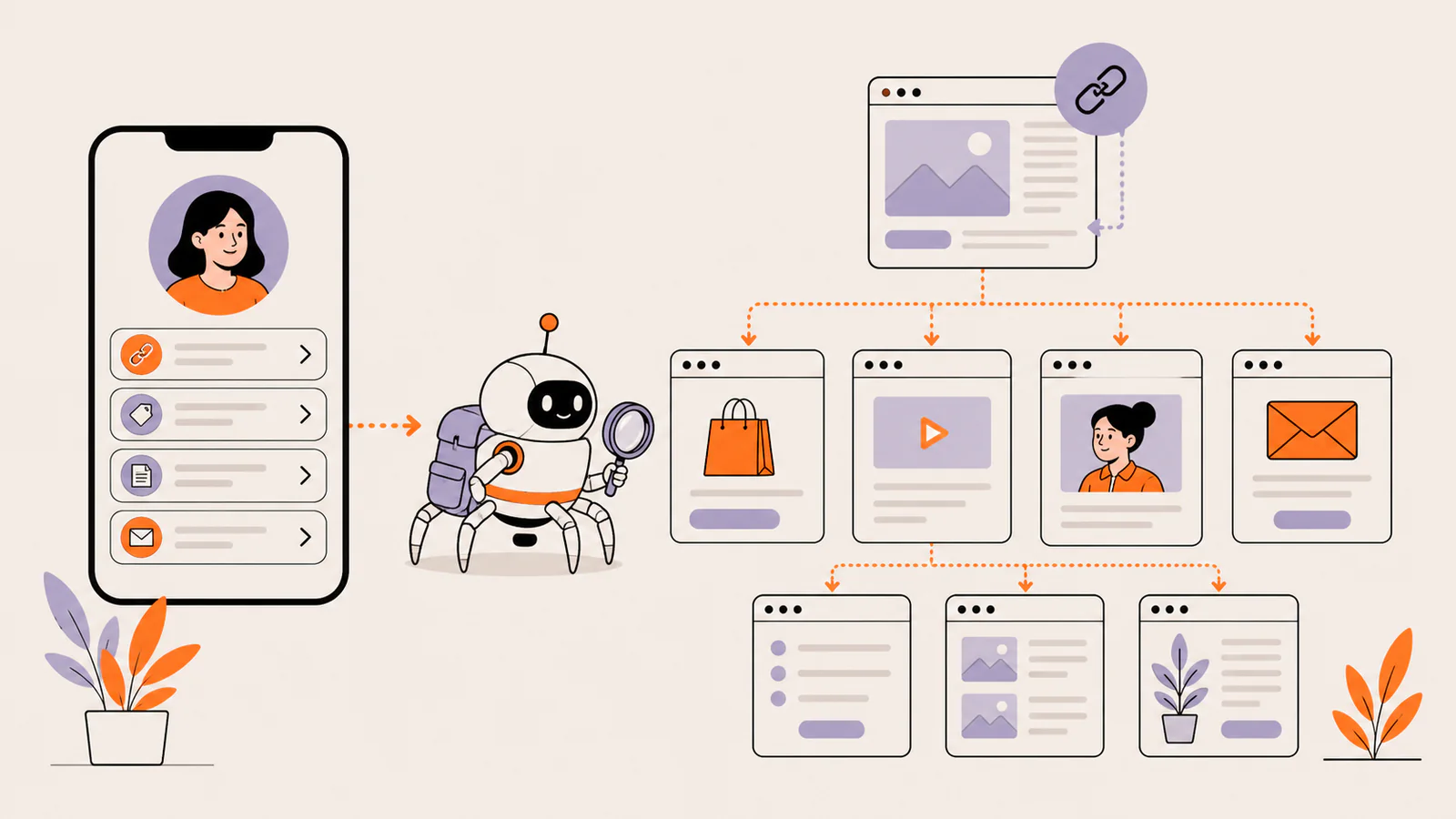
Google's link best practices say links are generally crawlable when they use an anchor element with an href. Descriptive anchor text helps people and Google understand the destination. On a bio page, label the action and destination specifically: View portrait portfolio, Book a 20-minute consultation, Read the 2026 impact report, or Shop current ceramics. Avoid repeating the same exact-match phrase across unrelated links and avoid hiding directory or partner links solely for ranking manipulation.
Primary source: Google Search Central link best practices — checked September 1, 2026.
Align the title, main heading, and visible answer
Google explains that title links may use the title element, visible main title, headings, prominent text, anchor text, and other signals. Give each public page one distinct purpose and keep the title concise. A creator profile might use a name plus profession; a business profile might use brand plus service category and location when accurate. Do not create separate pages for singular, plural, reversed, or misspelled variants of the same intent.
Primary source: Google Search Central title-link documentation — updated December 10, 2025 and checked September 1, 2026.
Snippets are primarily generated from the page itself and may use a meta description when it better describes the page. Put the direct answer near the beginning: who the page represents, what they provide, who it is for, and what a visitor can do next. A marketing slogan without factual context gives search engines and AI systems little reliable material to summarize.
Primary source: Google Search Central snippet documentation — checked September 1, 2026.
Canonicalization and duplicate profile URLs
A public profile can accumulate variants through www and bare hosts, uppercase paths, trailing slashes, preview domains, tracking parameters, and old usernames. Choose a permanent preferred URL, redirect obsolete variants where you control them, and emit a consistent canonical. Google describes redirects and rel canonical as strong canonical signals and sitemap inclusion as weaker. Consistency across internal links and external profiles reduces ambiguity, but Google may still select a different canonical.
Primary source: Google Search Central canonicalization documentation — checked September 1, 2026.
Build an answer cluster instead of keyword variants
One profile cannot satisfy every search intent. Connect it to a small set of pages with different jobs: a definition page, a best-tools comparison, a competitor comparison, a role-specific guide, and first-party evidence. Each page needs a unique decision, audience, facts, and sources. Consolidate close wording into one canonical answer. This improves usefulness and reduces cannibalization compared with dozens of pages that swap only a platform or profession name.
GEO and AI visibility use the same evidence discipline
AI answer systems are more likely to have usable material when pages contain concise definitions, decision tables, named limitations, dated sources, clear authorship, and consistent entity references. There is no special metadata that guarantees a mention. Write sections that can stand alone without removing caveats, cite primary sources for changeable claims, disclose conflicts, and seek legitimate third-party corroboration. Avoid fabricated reviews, stealth promotion, copied statistics, and mass-produced pages.
Measure qualified search outcomes
Track indexed URLs, non-brand queries, impressions, average position, clicks, landing pages, and the completed action that matters. Separate founder testing, crawler requests, direct traffic, and brand misspellings from acquired prospects. A page moving from no visibility to impressions is discovery; movement toward page one plus qualified clicks is ranking progress; signup, publication, booking, or purchase is business progress. Do not scale a template from a handful of impressions.
A safe optimization sequence
Frequently asked questions
Do link-in-bio pages rank on Google?
They can be crawled and indexed when technically accessible, and they can rank when relevant and competitive. A branded profile query is different from a broad non-brand query. Thin button lists usually provide less topic depth than a dedicated article or service page, so use the profile as an entity and routing hub rather than expecting it to answer every search.
Does adding more links improve SEO?
Not automatically. Links help discovery and context when they are crawlable, relevant, descriptive, and useful. More links can dilute the visitor decision and create maintenance risk. Hidden, automated, excessive reciprocal, or irrelevant links can resemble manipulation. Keep the shortest set that serves real users and supports the intended content relationships.
Can Liink guarantee indexing or AI citations?
No. Liink can publish a public visual profile and the Liink site can implement search and entity best practices, but search engines and AI systems independently decide crawling, indexing, ranking, retrieval, and citations. No page builder can truthfully guarantee those outcomes.
Continue with the canonical basics
Start with the link-in-bio definition and setup guide before choosing a tool or publishing a topic cluster.
For the architecture decision behind many profile SEO questions, compare a bio site vs Linktree before expanding the content system.
To test a focused public profile with descriptive destinations, create a Liink page. Liink does not guarantee indexing, rankings, AI mentions, traffic, or conversions.